Why I Became an Experiential Strategist and What It Did for My Career
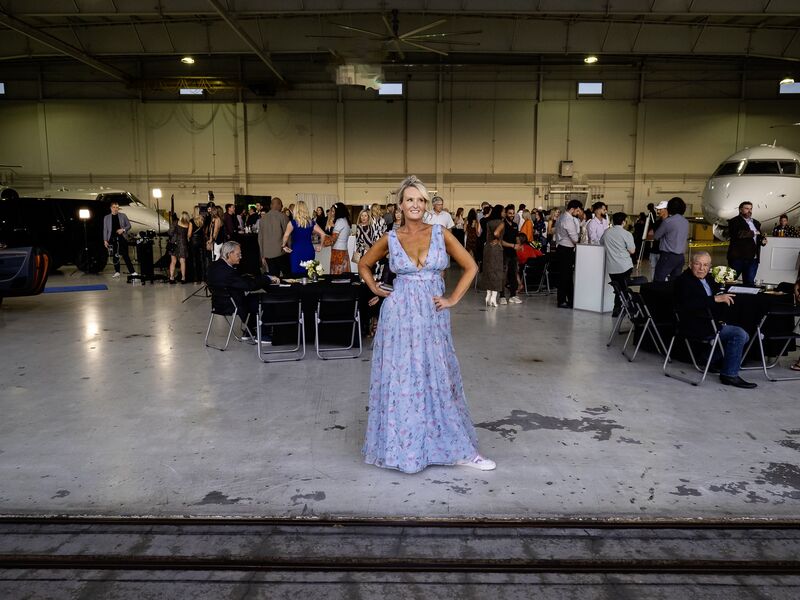
I was standing in the middle of an airplane hangar belonging to one of Denver's football greats.
Around me, one of the most meticulously designed brand activations I had ever built was coming to life. The ambiance was perfect. The flow was intentional. Every detail had been considered, reconsidered, and refined. We were launching the 2025 Bentley GT, and the experience was, by every visible measure, extraordinary.
And I had no idea if it worked.
Not really. Not in any way I could prove.
I had been hired because I was good at this. Great at logistics. Great at making things look and feel over the top. Great at creating moments that made people stop and stare. My clients kept coming back, spending upwards of fifty thousand dollars on corporate events and brand activations, trusting me with their brands and their budgets. And every single time, I would walk away knowing in my gut that it had been a phenomenal experience. I just could not tell you why.
You would think that an MBA in marketing and two decades in the industry would have connected those dots for me. It did not. I had all the credentials and all the experience, and I still could not hand my client a clear, communicated framework that proved what their investment had actually done.
That realization, standing in that hangar, surrounded by something beautiful I could not measure, was the moment everything changed.
The Six Months That Rewired Everything
I made a decision that most people in this industry would never make. I stepped back from planning for six months and went looking for an answer.
I audited every event and activation I had produced over the last two decades. I went looking for the common thread in the ones that were undeniably successful, the ones where clients renewed without hesitation, where attendees talked about it long after it ended, where something real had shifted in the room.
What I found was emotion.
Every single one of my most successful experiences had a deliberate emotional element at its core. Not accidental feeling. Not ambient energy. A specific, engineered emotional moment that created a response in the people in the room.
That discovery sent me down a research path I did not expect. I read ten books, including "How Emotions Are Made" and Descartes' Error. I went deep into the neuroscience and psychology of how emotions are constructed and how they drive human behavior. And I found the answer I had been looking for my entire career.
Emotion causes behavior. Behavior produces measurable outcomes. And if you can design for the emotion, you can design for the result.
Building the Framework
Armed with that understanding, I built what I now call the Experiential Edge Blueprint, a five part strategic framework for designing experiences that produce specific, trackable behavioral outcomes. It was not theory. It was built from two decades of real work, validated by research, and designed to be applied to any activation regardless of budget or scale.
I tested it. First on a handful of experiences, then on ten. Every single time, the results were clear. My clients were not just happy. They were wowed. Not by the aesthetics, which had always been strong, but by the fact that for the first time they could see exactly what their experience had done and why.
Why I Built the Certification
The more conversations I had inside this industry, the more I realized that what I had built was not just useful for me. It was filling a gap that almost no one was talking about.
The research confirmed what I was hearing on the ground. The majority of event and experiential professionals cannot prove their event success. The ones who can are a minority, and they hold an enormous competitive advantage because of it. Brands are spending billions on experiential and only a fraction of the professionals executing those experiences can demonstrate the return.
That gap is not a talent problem. It is a framework problem.
So I created the Certified Professional Experiential Strategist certification to teach other senior professionals the exact framework I had built, because the industry does not need more people who can produce beautiful experiences. It needs more people who can prove those experiences changed something.
That is what an experiential strategist does. We do not just design for the moment. We design for the outcome. We engineer the emotion, track the behavior, and deliver the evidence.
I became one because I had no other choice. Once you know how to do this, you cannot go back to doing it any other way.