Porsche Just Trained 119 Salespeople In Two Days. Most Companies Cannot Do This In Two Months.
Most product training looks the same no matter the brand. A conference room. A slide deck. A parking lot walkaround if you are lucky. Then everyone goes back to their desk and forgets 80 percent of it by Friday.
Porsche did not do that.
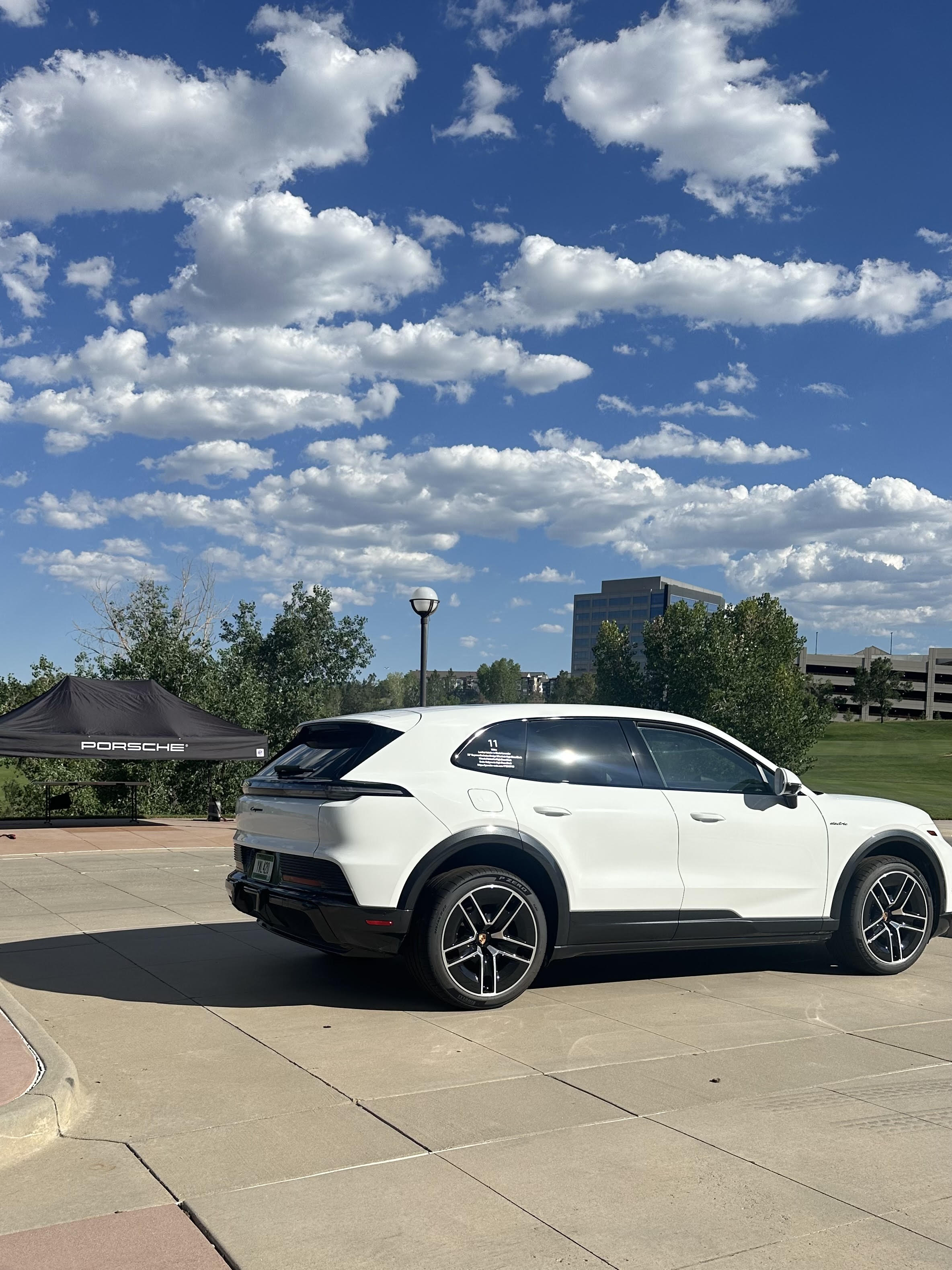
Ahead of the launch of the 2026/2027 Cayenne Electric, Porsche brought 119 sales team members to the Omni Interlocken Resort for a two-day program built around the car. Day one was education. Day two, every single person drove the Cayenne Electric for eight hours, through the city and up into the Rocky Mountains.
That is not a product briefing. That is an event and experience built to change behavior. And when I run it through the Experiential Edge Blueprint, you can see exactly why it works and exactly what Porsche should now be measuring to prove it. This is the framework built to prove ROI and ROE every. Single. Time.
Purpose: Why This Event Existed
Every experience needs a purpose statement before a single detail gets planned. Here is the one I would write for this program:
Purpose: Build unshakeable, first hand product conviction in every salesperson so their future customers hear confidence instead of a script.
Notice what that purpose is not. It is not "teach the specs." Specs are information. Conviction is what actually sells a six-figure electric SUV to a skeptical buyer standing on a dealership floor.
Behavior: What Porsche Actually Needed To Happen
The desired outcome was never "employees can recite horsepower and range." The desired behavior was that every one of those 119 people walks onto a sales floor able to speak about the Cayenne Electric the way you speak about a car you have actually driven through mountain switchbacks, not one you read a spec sheet on.
That behavior shows up in the sales conversation as authenticity. Customers can feel the difference between someone reciting a brochure and someone describing what regenerative braking felt like coming down a grade at 9,000 feet.
Emotion: The Mechanism That Made The Behavior Possible
This is the pillar most companies skip, and it is the one that makes the entire program work. You cannot lecture someone into conviction. You have to give them an emotion strong enough to attach to the product.
Porsche gave their team two distinct emotional experiences in one day. The exhilaration of performance driving through a city grid, and something closer to awe managing a two ton electric SUV through the Rockies. Neither of those emotions was left to chance. They were designed into the route.
That is the entire premise of my framework in one sentence. Every experience produces an emotion whether you planned it or not. The question is whether you are the author of that emotion or a bystander to it. Porsche authored it.
Activation And Anchoring: How The Experience Got Embedded
This is where the two day structure earns its cost. Day one built the technical foundation. Day two took that foundation and anchored it to a physical, sensory, eight hour memory across two completely different driving environments.
That sequencing matters. Knowledge without an anchoring experience fades fast. An experience without the knowledge underneath it is just a fun day out. Porsche stacked both, in the correct order, so the mountain drive reinforced facts the team had just learned instead of replacing them.
Outcome: Where Porsche Can Prove The ROI And The ROE
Here is where most brands stop. They ran a great event, everyone had a good time, and nobody ever proves it did anything. That is the gap costing the events and experiential industry credibility right now. Only 23 percent of marketers can currently prove experiential impact, even though global experiential spend hit 128 billion dollars in 2024.
Porsche has a real opportunity to close that gap on this program, because the design already sets up the measurement. Here is what should get tracked before this becomes just a nice memory for 119 people:
Time to sales floor readiness compared to teams trained the traditional way
Customer facing confidence, self reported and manager observed, in the first 30 days post launch
Actual conversion and close rate on Cayenne Electric specifically, benchmarked against prior launches
Retention of technical product knowledge at 30, 60, and 90 days
Employee advocacy, meaning how many of those 119 people are organically talking about the car on their own social channels
That last one is a quiet but powerful signal. When training produces genuine emotion, people talk about it without being asked to. That is a behavioral outcome you can literally screenshot.
The Bigger Point Here
You do not need to be Porsche's budget to apply this. You need the discipline to run every activation through purpose, behavior, emotion, activation and anchoring, and outcome, in that order, every time. That is the difference between an event and an event that produces evidence.
If you are the person in your organization who already knows this instinctively, who has felt an event work but has never had the framework or the credential to prove it and defend your budget with it, that is exactly the gap CPES was built to close.
The Certified Professional Experiential Strategist certification is 1,997 dollars now. It increases to 2,997 dollars on September 8th. If you want to be the person who can walk into a budget conversation with proof instead of a highlight reel, now is the time.
Get CPES certified here.