How Leadership Actually Sees Your Event (And Why That Difference Is Your Opportunity)
How Leadership Actually Sees Your Event (And Why That Difference Is Your Opportunity)
There's a moment almost every event planner eventually faces.
The room was full. The feedback was glowing. The photos looked incredible. And then someone, a CEO, a CFO, a CRO, a client, turns around and asks the only question that actually matters to them:
"So what did this do for the business?"
If you've ever gone quiet for a second before answering that question, this post is for you.
The View From the Top
Here's the truth most planners don't want to hear: to leadership, your event isn't an experience. It's a line item.
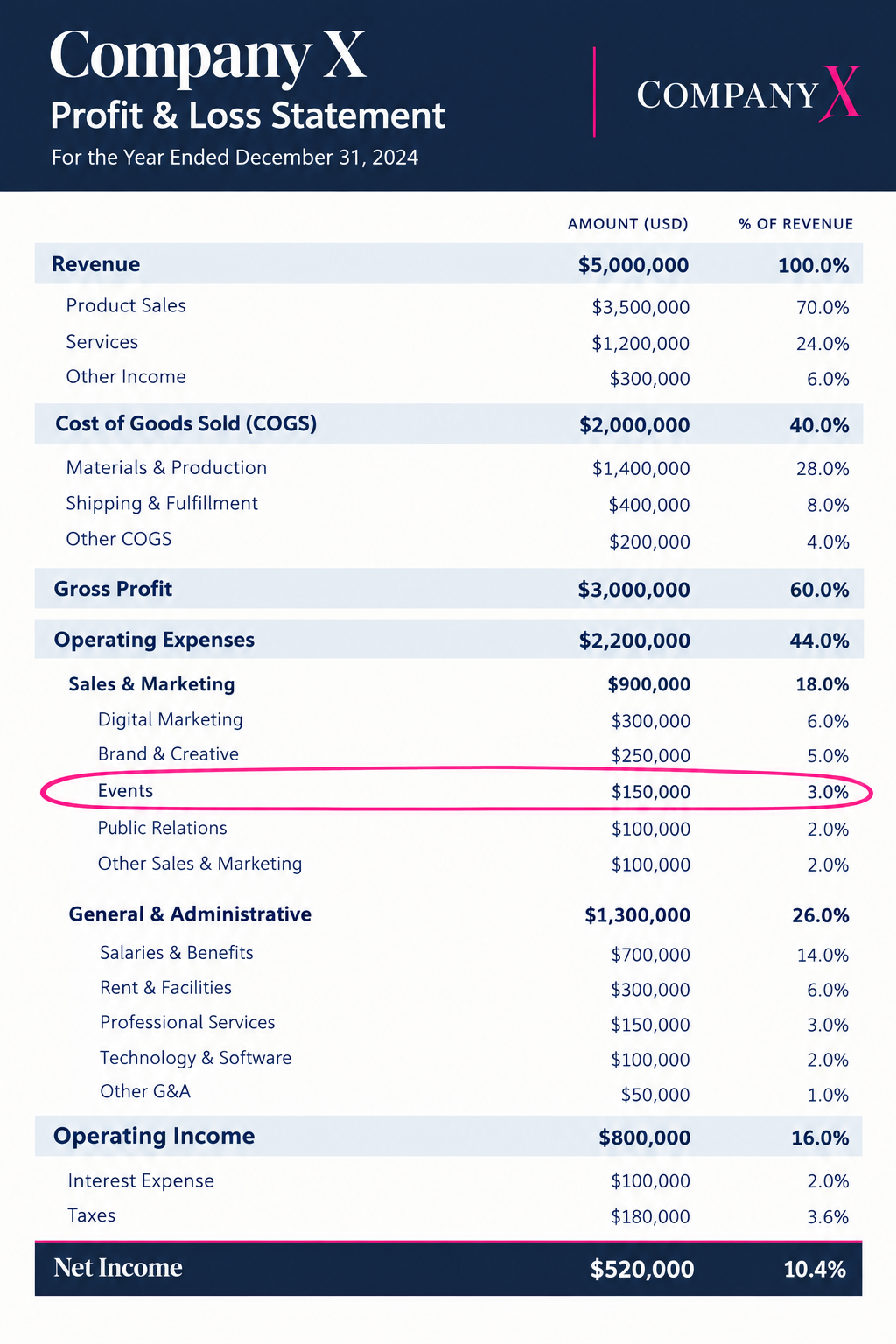
That's not cynical, it's just how they're built to see the world. Leadership doesn't zoom in on the room the way you do. They zoom out to the whole business, the whole budget, the whole quarter. Your event shows up to them as a number sitting inside a bigger number, competing against every other number on that page for a reason to exist next year.
And here's the part that stings a little: many of them never even set foot in the room. They don't feel the energy shift when the lights come up. They don't see a stranger turn to a stranger and start a real conversation. They don't hear the applause. All they get is a report, a recap, or a hallway comment, and then they have to decide whether it was worth what it cost.
So before you can prove your event mattered, you have to understand whose definition of "mattered" you're even trying to meet.
How Each Seat at the Table Actually Sees Your Event
The CEO is looking at the story. Did this event move the business forward in a way they can repeat in the next board meeting or investor call? They want a narrative: growth, culture, market position.
The CFO is looking at defensibility. Can this cost be justified against every other way that money could have been spent? They're not asking "was it beautiful," they're asking "was it the best use of this dollar."
The CRO is looking at pipeline. Did this event create, accelerate, or protect revenue? Leads, meetings booked, deals influenced, that's the language they think in.
The CMO is looking at brand equity and campaign contribution. Did this event reinforce the story the brand is trying to tell across every other channel, or did it stand alone, disconnected from the bigger push?
Your client is often looking at all of the above at once, because they have to walk into their own leadership meeting and defend the decision to hire you.
None of these people are wrong for seeing it this way. They're just seeing a different event than the one you built.
Your View From the Ground
You, meanwhile, are living inside the event. You're solving the load in problem at 6 a.m. You're watching a guest's face change the moment the experience clicks for them. You feel the event in a way no spreadsheet will ever capture. That feeling is real, and it matters, but it isn't a language leadership was trained to read.
Here's the honest version of it: leadership sees a budget line. You feel a lived experience. Neither side is wrong. They're just standing in two completely different places, looking at the same event.
Why This Difference Is Actually Your Way In
Most planners spend their whole career staying on their own side of this, heads down in logistics, hoping the feedback forms will speak for them.
The planners who learn to stand in both places at once, who can feel the room and translate that feeling into the CFO's language, the CRO's language, the CEO's story, stop being "the person who ran the event." They become Experiential Strategists.
That shift happens the moment you stop asking "how do I prove the event was good?" and start asking:
What did leadership actually need this event to accomplish, in their own terms, before we even designed it?
What behavior or outcome would tell them it worked?
How do I show them that, in the language of the P&L they're already looking at?
That's the whole game. Not better photos. Not a longer recap deck. A translation between the room you built and the number they're staring at.
Where to Start
The next time you're asked to prove an event was worth it, don't start with what happened at the event. Start with what leadership needed to see happen because of the event, for the business, for behavior, and for the people in the room. Build the proof backward from their definition of success, not yours.
That one shift, designing and reporting toward their view of the line item, not just your view of the room, is the difference between being an event planner and becoming an experiential strategist.